
Kaka at Bason Gardens!
If you want to cause excitement in a bunch of birders, a very good start would be to spread the story of a New Zealand Kaka having been sighted at Bason Botanic Gardens. One of the members of the local Camera Club happened upon and photographed, a Kaka feeding on the buds in a deciduous tree at the Gardens on 16 June 2022. News rapidly spread among those of us who like to study and photograph the local birdlife.
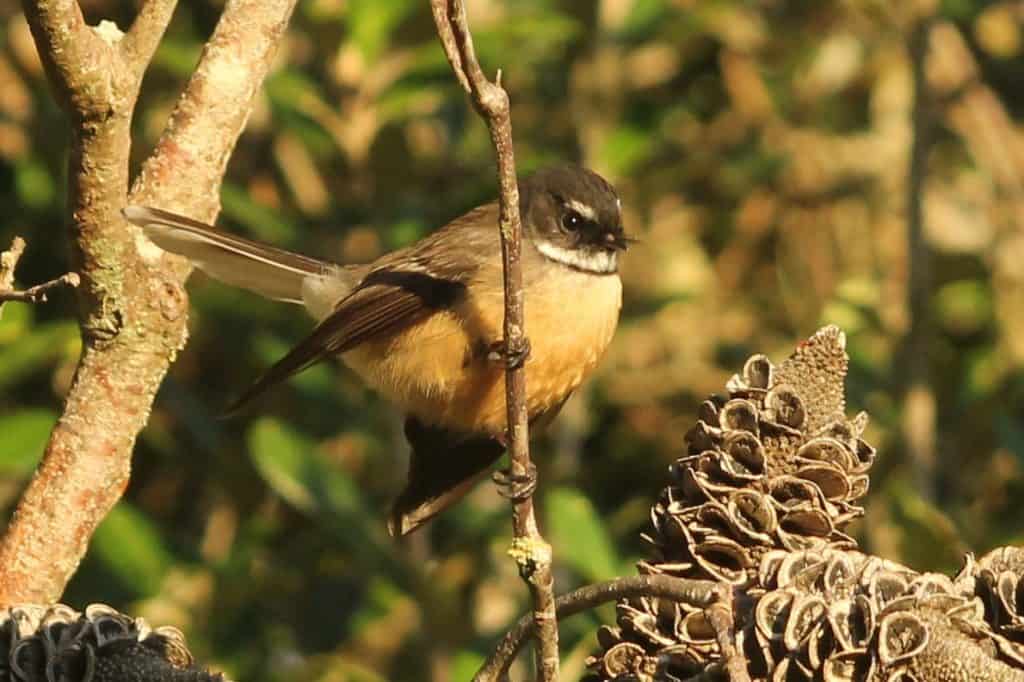
Bason Gardens is a stunning local botanical garden that was opened in 1982. It was not at the outset, much more than pasture that had been running deer. The Council and a group of keen horticulturalists were determined to develop it into a public botanical reserve. When I first visited in 1983, my immediate reaction was ‘What a bunch of dreamers!’ Now I regularly, and silently, eat humble pie as I see the wonderful result of both their dedication and the huge amount of effort that has resulted in a Botanic Garden where the public can visit, barbecue, picnic, play informal sports and watch the wide variety of plant and birdlife that have now established in the woodlands and the wetlands.
So back to the kaka: Being very keen to get myself a photo of a local Kaka, by 4 July I had been out to Bason Gardens searching for six days in a row. At least four other Whanganui bird photographers had also been doggedly searching the areas of known sightings and any likely trees without any satisfaction. Bird photography can be frustrating, but at least these speculative trips are close to home and we can easily try, and try again.
The Kaka does seem to enjoy the gardens and had been seen by the staff several times. Annoyingly, once was at 10.30am not long before I arrived that same afternoon. On 29 June I heard a Kaka behind the Banksia trees, where the road dips down to the Boothby Fern House. I couldn’t get a visual on the bird and it may have been over the ridge where the Native Plants track winds down to a wetland.
Later, on 5 July, one of the workers recorded a video of a Kaka in the Banksias at the northern end of the reserve, and on 10 July, Phil Thomsen saw one fly into a tree behind the homestead. There was then, at least one bird continuing to frequent the gardens and there were two birds sighted in several of the early sightings. There was no doubt that we would keep trying for a photo of these elusive and intriguing native parrots.
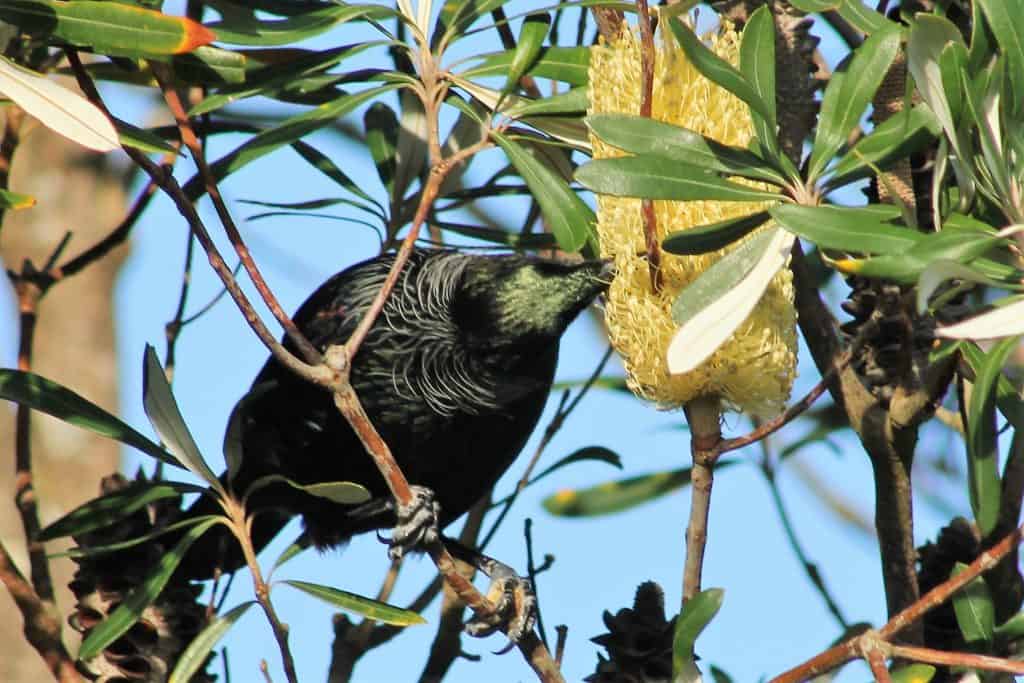
It’s not all bad news. In this now well developed Botanic Garden, there are many bird species that can be enjoyed. While I have been looking for Kaka, I have seen many tiny grey warblers feeding in the Banksia integrifolia above the Kowhai Bank. They are a difficult bird to photograph, as they constantly dart about gathering insects and nectar. That’s when the bully boy Tui arrive. They come from everywhere, determined to protect their perceived right to the sweet nectar in the new flowers. The grey warblers are quickly harassed out of the trees, as are the many silvereye who also like their chances with a ready supply of nectar.
Across the roadway, a hungry kereru was lunching on his fresh green salad, by systematically stripping the new leaves from young kowhai. I feared that the young trees were rapidly losing their life-giving foliage but I guess nature is in control of the subtle balance of our native birds and trees.
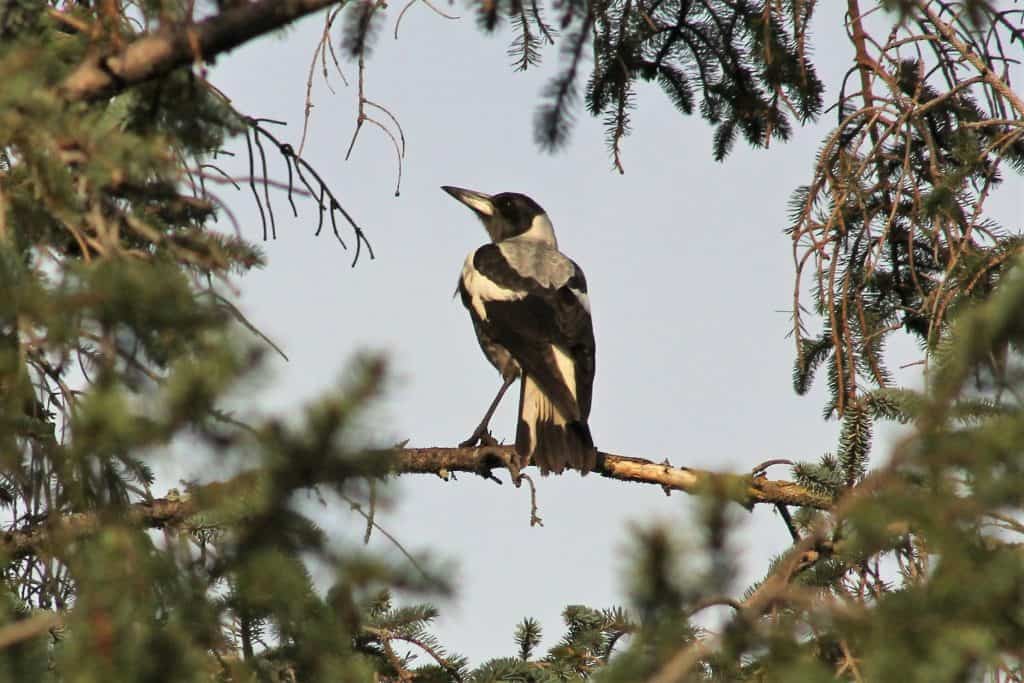
During my excursions, I encountered a charm of 35 goldfinches in the Arboretum and as is often the case, a harrier hawk was circling above, much to the consternation and panic of the rock pigeons that are everywhere. Magpies also, are common in many areas and Denis Glover’s ‘Quardle Oodle Ardling’ can be heard throughout the Gardens. Below the Millennium Hill, I was trying unsuccessfully, to get the portrait of an eastern rosella as it sat and watched me, laughing from his dark tree that he immediately left, having decided I had come close enough.
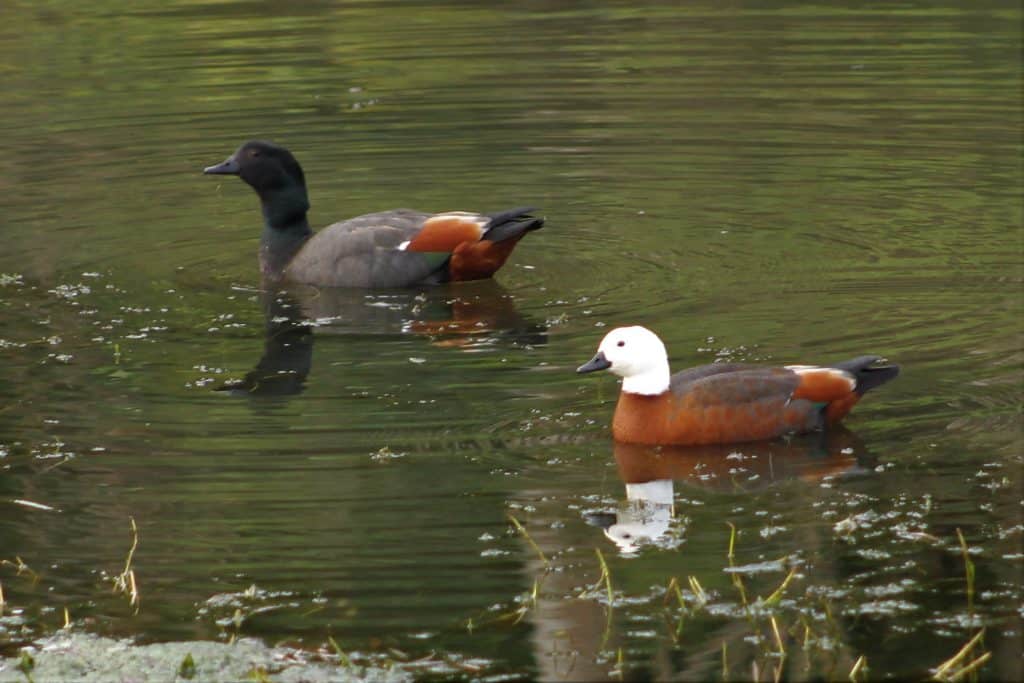
Beside a couple of the barbecue installations there are lots of planked seating where one can watch the mallard ducks, paradise shelducks, grey teal, and Australian coots that abound in the Lake. One of two black swans was gathering nesting material just in front of the Tea House, so cygnets would be a sight soon enough. I have seen pied shags fishing, and black shags with a little black shag roosting in the poplars above this peaceful picnic spot.
The plantings make this a delightful garden where the range of planted areas mean that most people will be able to find a place that is a pleasure to relax in and a joy to just sit and gaze. Just feel free to let me know if you sight that very annoying and equally elusive kaka!