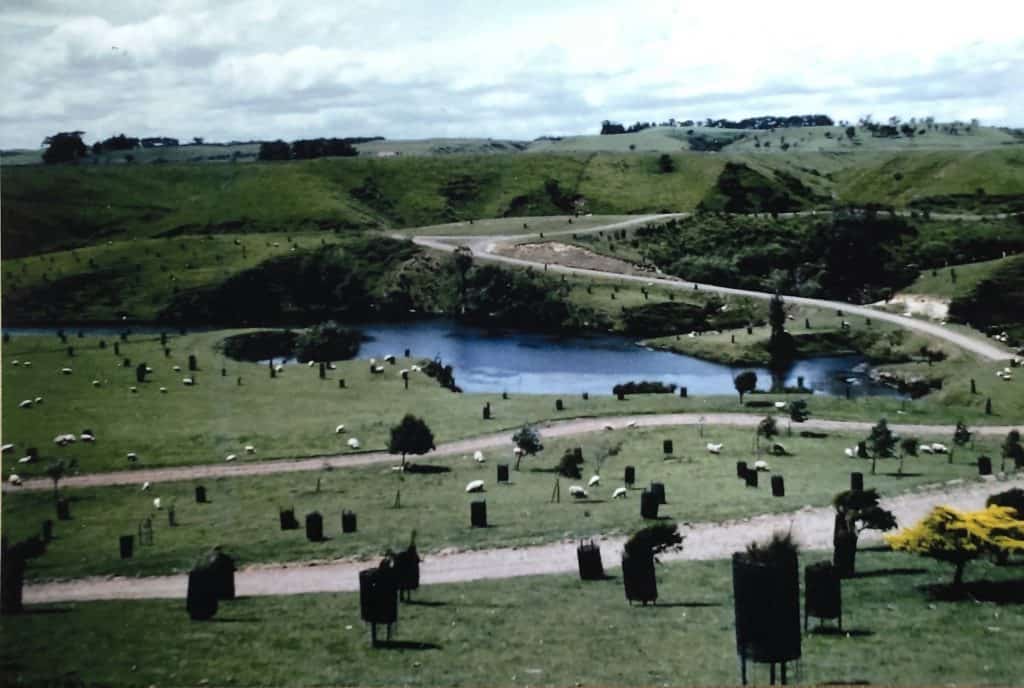
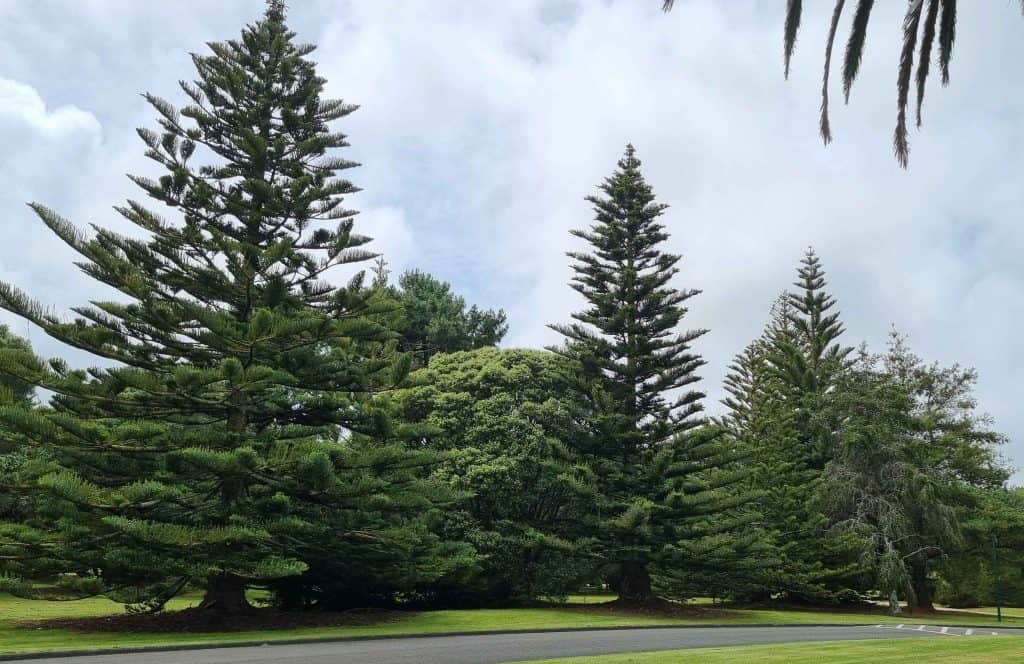
One of the most iconic plants at our botanic gardens is the Norfolk pine, Araucaria heterophylla. Along with Phoenix canariensis and the pohutukawa, it would be the most widely planted tree at BBG. In the first few decades of planting here, it was, indeed, a very different place. Subject to coastal winds/gales, a lot succumbed but not the Norfolk pine, the Canary Island date palm or the pohutukawa. If we look at their provenance, we see similar coastal environments. Norfolk Island and the Canaries are small islands in large water masses and the pohutukawa largely grows on our coast, north of New Plymouth.
But it’s the Norfolk pine I want to think of at the moment. A. heterophylla comes from (as already said) Norfolk Island. The Araucaria genus, Agathis (kauri) and podocarps are the big players in the southern hemisphere conifers. Of the 19 araucaria species, they are split into two groups: Eutassa and Araucaria. Since the four sharp ones (monkey puzzle, bunya, parana pine and klinki pine) were first to be named, they took Araucaria as their sub-group name, while the rest, the soft ones (13 from New Caledonia, one from Norfolk Island and one from mainland Australia), are in the Eutassa sub-group – all still in the Araucaria genus.
So, a very small island (Norfolk) and one a bit bigger to the north (New Caledonia) are the evolutionary base for the beautiful eutassa araucarias. Once, they were, no doubt, part of a common landmass (which included New Zealand too). The Norfolk pine is not a pine (not a Pinus species) but was so named because it reminded northern hemisphere settlers of former flora. This prevalence of giving common names that hark back to a previously familiar flora is unfortunate, but I guess we’ll get over it.
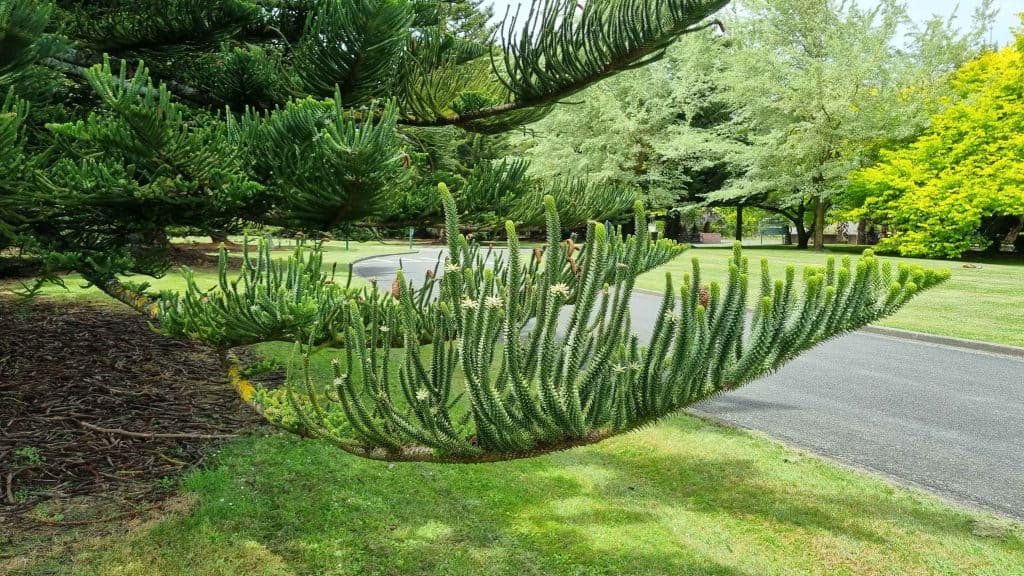
Although there’s no need to describe the Norfolk pine (perhaps the most easily recognised and widely known tree in New Zealand), most don’t know of its usefulness, besides ornamental and shelter. It is a very good timber, perhaps a bit soft and in need of borer treatment, but it’s very beautiful and strong, first cousin to our kauri. On Norfolk Island, they would leave logs for a period in salt water to reduce the borer problem.
I remember Keith Burtt (former member and long-serving chair of the BBG Friends/Trust Board) had dreamt of roadside plantings leading from the Bason BG to Whanganui – the Norfolk would have been a wonderful candidate. Unfortunately, there was too much red tape and it couldn’t happen. A stylised Norfolk pine was part of our previous logo.