
Recently we’ve been discussing the merits, or otherwise, of letting the grass grow. It can be a hot horticultural topic and while at this time of year most of us are lifting the blades and not mowing as often in an effort to keep a strong green lawn through summer, a few of us pack away the mower for good.
In a former life I managed an award winning garden maintenance firm and one of the items we were judged on was faultless green lawns, a time consuming and fussy business. But as many of us can attest, a quick cut with the mower can make the rest of the garden look great even if we haven’t got around to all the weeding. I guess it’s the contrast of the manicured green against the abundance of the garden beds. Maintaining a perfect lawn is a lot of work, mowing is just the start; a dedicated regime of feeding, weeding, watering and pest control is also required. I must admit that while grass grubs have never had my sympathy I banned the use of worm killers, let’s not make a mountain over a few worm hills, it’s nothing a good reel mower can’t flatten out.
At the Bason, the maintenance team use a mix of lawn lengths in different areas, short cropped in the Homestead Garden, suitable for picnics on the wider greens and flats and longer in less trafficked areas. Part of this is the balance of use and cost, but there are a host of ecological benefits to letting the grass grow. Increased insect population, moisture and soil benefits are part of the story, as are the aesthetics of longer grass resembling meadows.
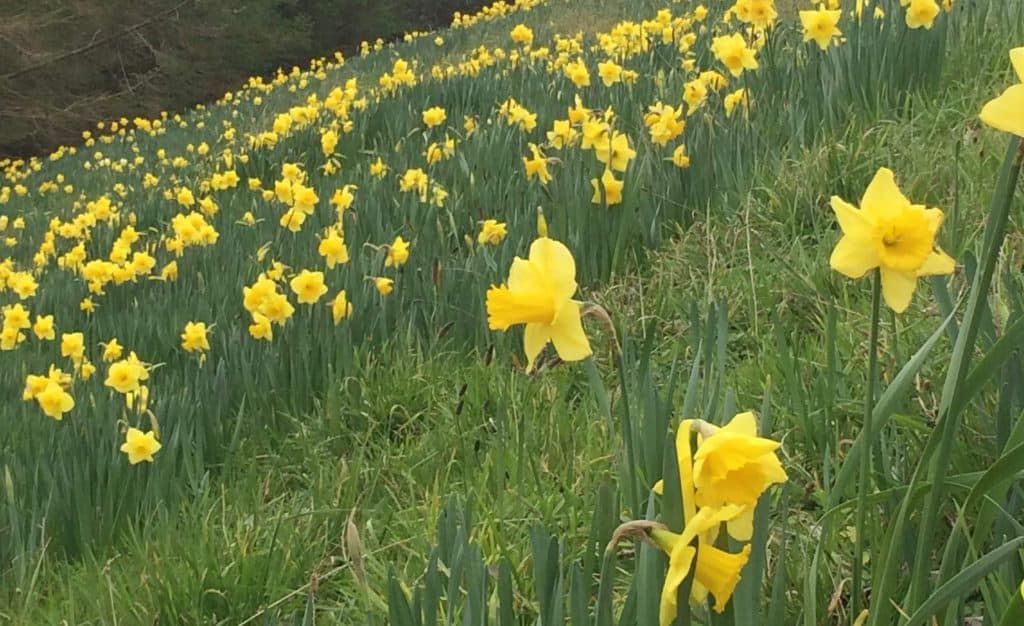
If you want to let daffodils naturalise in your lawn, like we do at the Bason, you will need to let the grass around them grow until the leaves of the bulbs die back, typically this means longer grass in early spring which can provide a boost to local birds and bees. And it’s not just the Bason that does this, the Wellington Botanic Gardens have been doing the same thing as advocated by their Team Leader of Grounds & Trees, Cory Meister: “Because we no longer mow the whole area, we are using less fuel which means lower carbon emissions, and because it is no longer kept as a fine lawn, we also don’t need to use chemicals to control weeds. Instead we allow non-invasive plants and flowers to seed and hand weed out any nasties. All of this results in a smaller environmental impact.”
Traditionally meadows were for cropping hay, over summer grass was left to grow so it could be cut and harvested for use as winter stock food. But before you picture pretty flowering pastures, think about our climate and land use. New Zealand is not a land of prairie and meadows, our native vegetation is forest, and what grassland we had were more tussock than meadow. Our agricultural record has meant we have imported a host of non-native grasses and fodder crops and as most farmers will attest, grass is the basis of their livelihood. Let’s not forget that the Bason was once a farm and is surrounded by farmland, so our lawns are really tamed fields. So what’s the harm in not mowing?
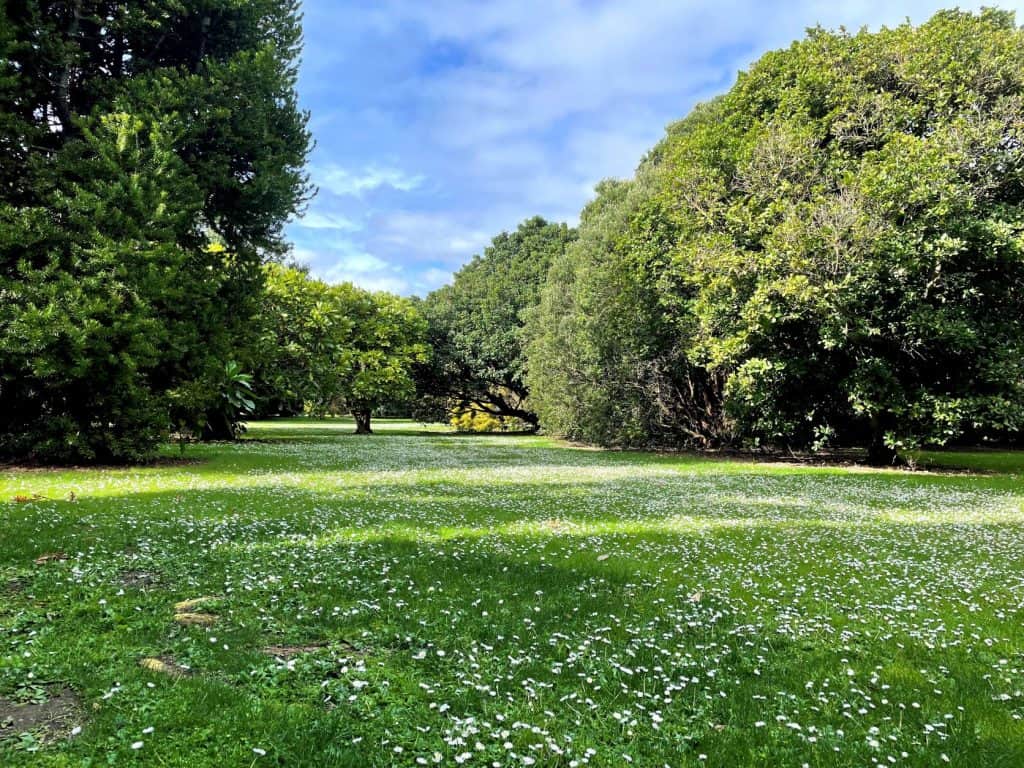
If you live in the country, few of us mow our verges, the strip along the road is just too long. But most of us don’t let the grass grow unchecked, as it will rapidly be taken over by undesirables such as thistles, dock and foxgloves. But while we may not indulge in picturesque poppy filled paddocks, farmers add clover, plantain and chicory to our grasses to improve them. Left to flower, these, along with dandelions and lawn daisies, can produce an attractive meadow like effect. But you will still need to graze, or if four legged mowers aren’t your thing then mow them on at least a monthly cycle or the grass will take over and you won’t see any flowers for the leaves.
If you live in town, then it can be hard to give over a large part of your garden to create a meadow. You may also find it difficult if you, your neighbours, or pets suffer from allergies that can be brought on by flowering grasses. But if you have fruit trees then plantain, comfrey and chicory will help, as the deep rooted plants will help bring up nutrients to the trees. Cut down and mulched in place this is known as a herbal lay. While not a pretty flower, plantain has the added benefit of producing a greater degree of the green leaf volatiles that many of us associate with the smell of fresh cut grass, and these have an uplifting effect that city bound inhabitants miss. Plus farmers love it as it helps fatten lambs faster than standard pasture grass.
Not all of us want a hay meadow. Some pine for a wildflower meadow, this is much more difficult then as the needs of wildflowers are for low fertility soils and significant climate changes, which is in conflict for most farm and domestic lawns that thrive on high fertility and high rainfall. Most naturally occurring wildflower areas have significant periods of either drought or snow cover that stops them being forested. Some rely on wild fires to keep the area clear. All tend to have a peak flowering season where the flowers erupt when the weather conditions are right to produce a spectacular display before setting seed and going dormant again. At the Bason we are planning a major reworking of our own Prairie Garden as keeping this bed true to its name is particularly difficult in the Whanganui climate. We don’t try to maintain a wildflower lawn, rather we work on a bed of prairie style plants and grasses to achieve the desired effect.
Some councils have tried mowing less and having wildflowers on motorway edges, and while people loved the extra flowers it didn’t prove to be cost effective as the edges still had to be mowed (or people thought it was neglected) and it required greater effort to keep the grass down to allow for the wildflowers to flourish.
So, to mow or not to mow, that is the question. I am a firm believer in mowing less, and while I wouldn’t give up my mower (or the clippings for the compost) there is beauty and more than a few carbon credits in being a little shaggy and letting the grass grow.