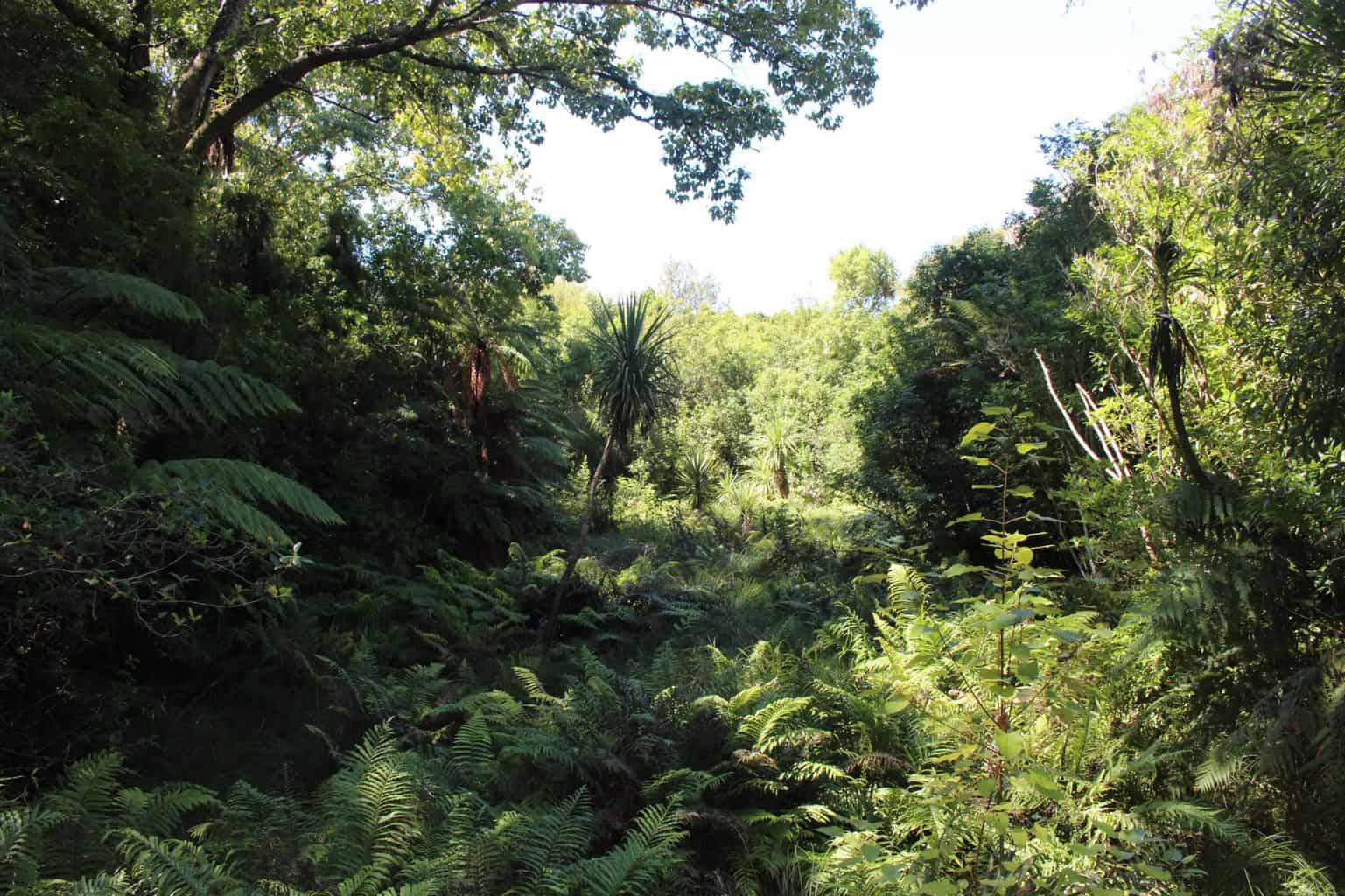
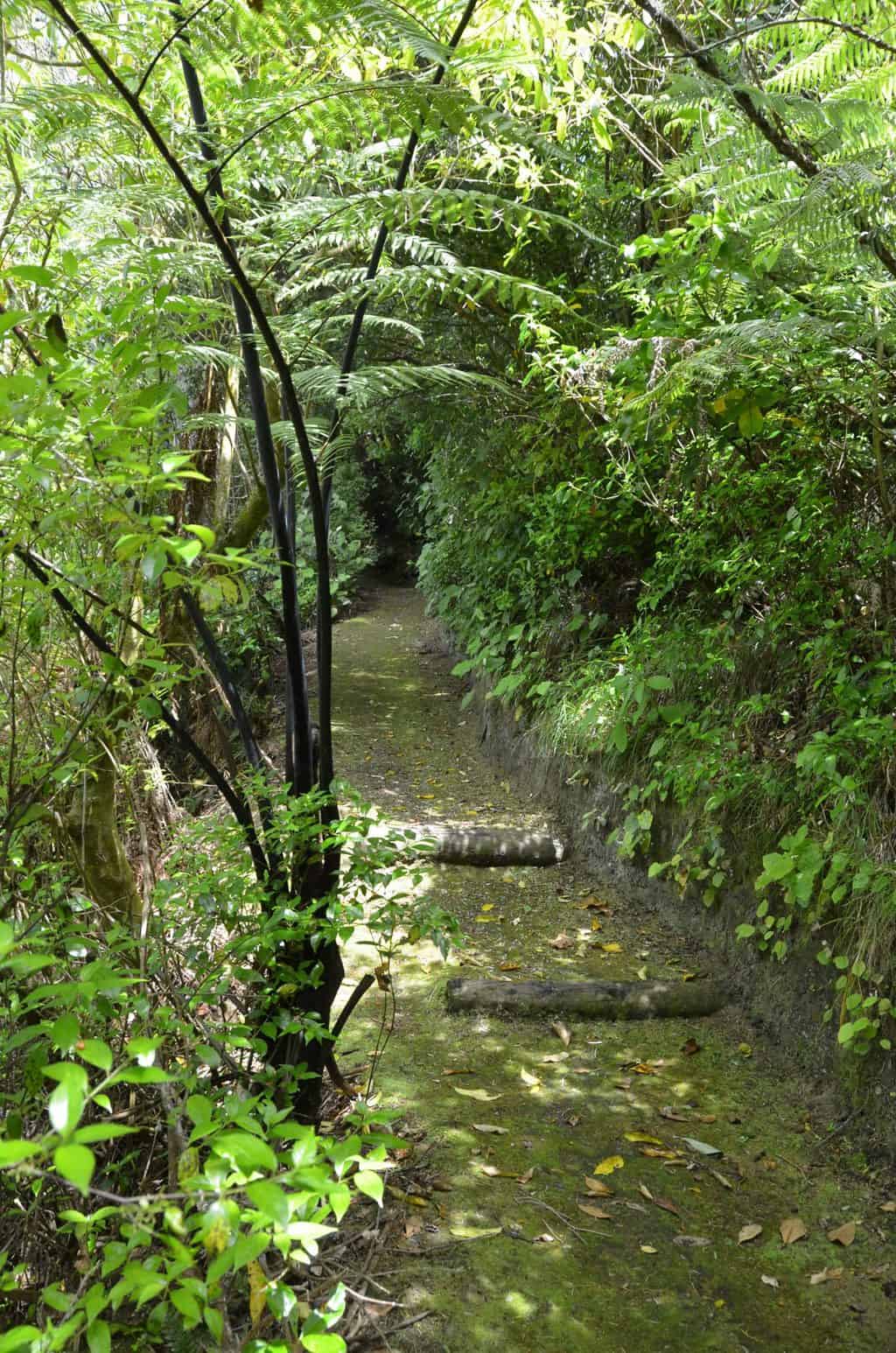
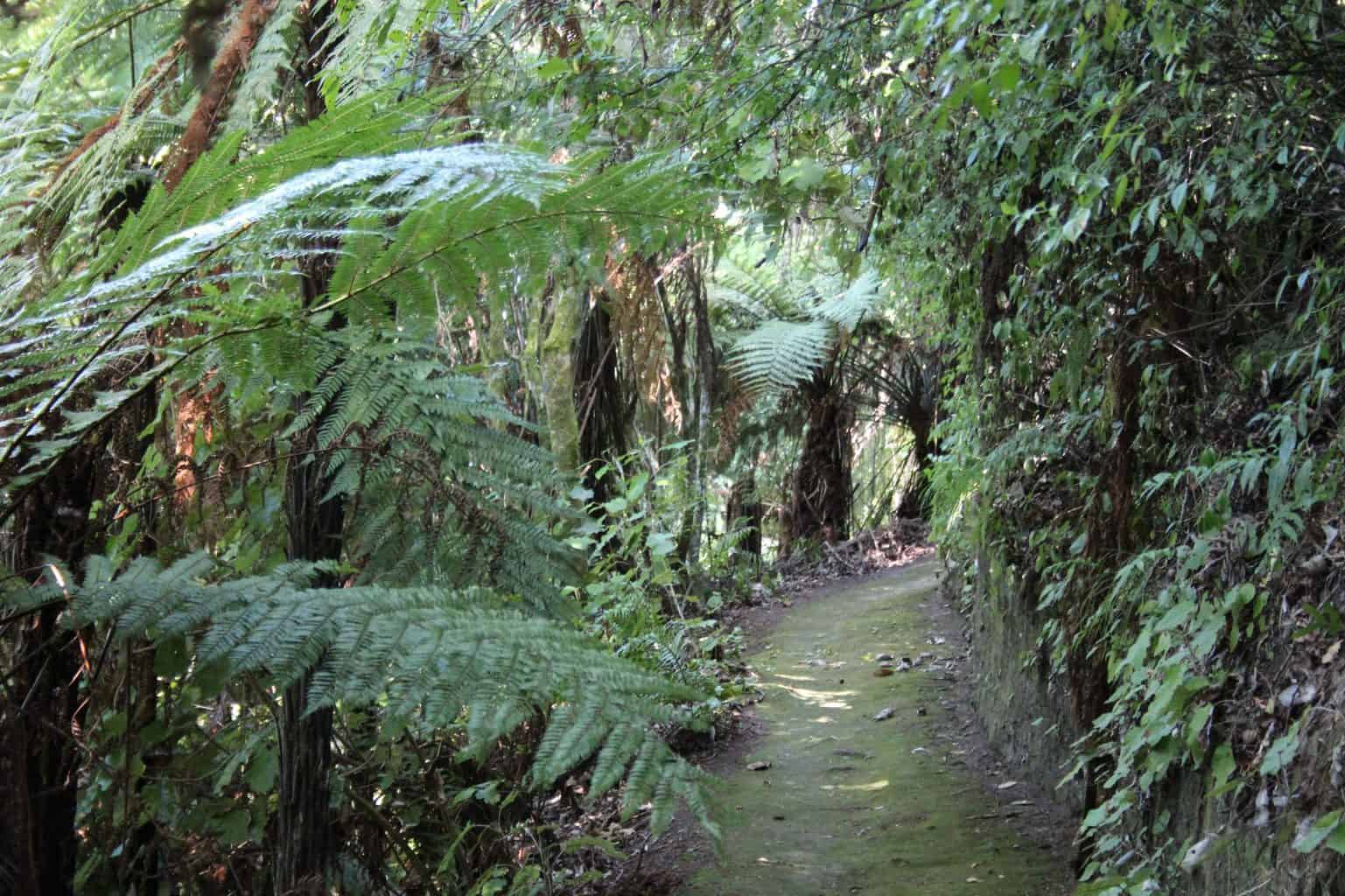
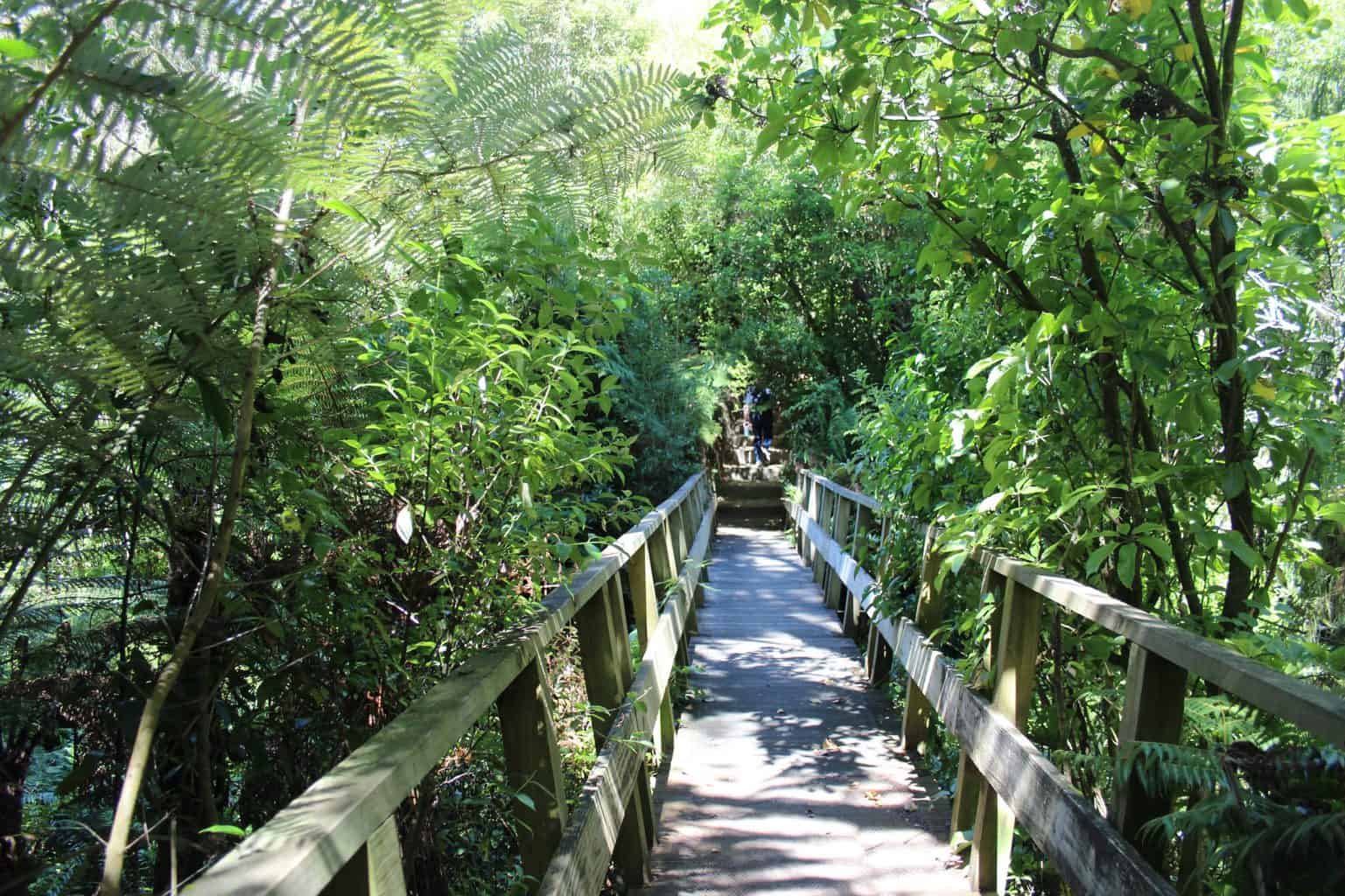
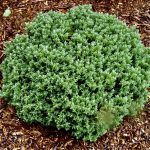
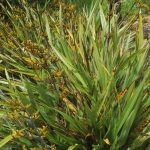
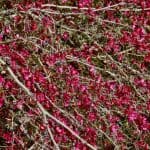
The Native Forest can be accessed from the parking area by the Boothby Fern House or at the hairpin turn on Millennium Hill. The Native Walkway winds itself around the hill through the Phormium (Harakeke/Flax ) collection and a mix of native trees and shrubs including: Cordyline australis (Tī kōuka), Macropiper excelsum (Kawakawa) and Pseudowintera colorata (Horopito ). At the base of the hill, past the Japanese Tea House the walkway crosses the Anzac Bridge to the native wetlands that help filter the water going into the lake.
The walkway features our natives in a naturalistic setting. But this is not the only place to see our native plants as a number have been used in other areas to highlight how native plants can be used in a range of planting schemes. These plants include: Arthropodium cirratum (Renga Renga) in the Homestead Garden, Asplenium bulbiferum (Pikopiko) by the Conservatories, Pachystegia insignis (Marlborough Rock Daisy) on the Millennium Steps.
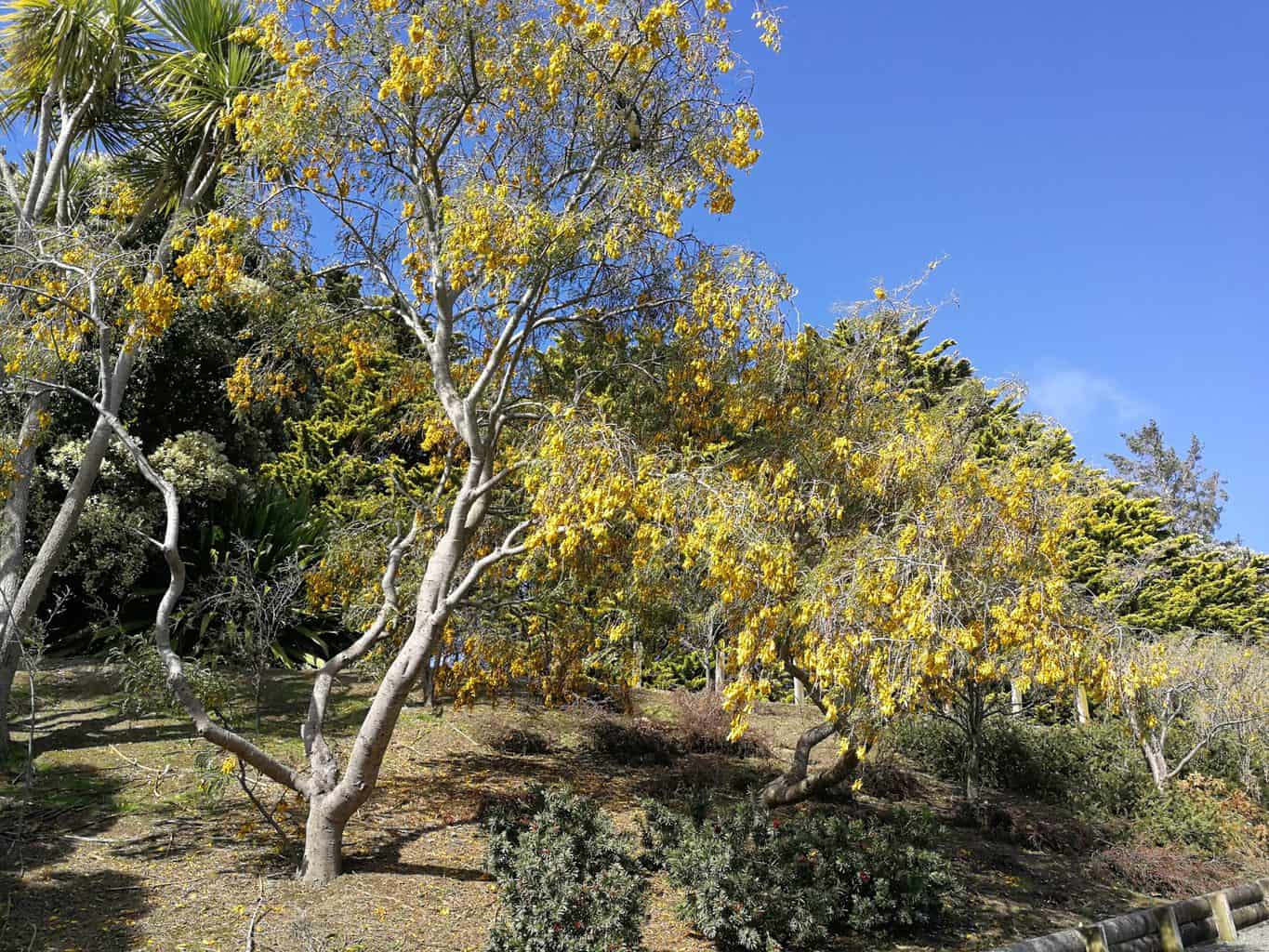
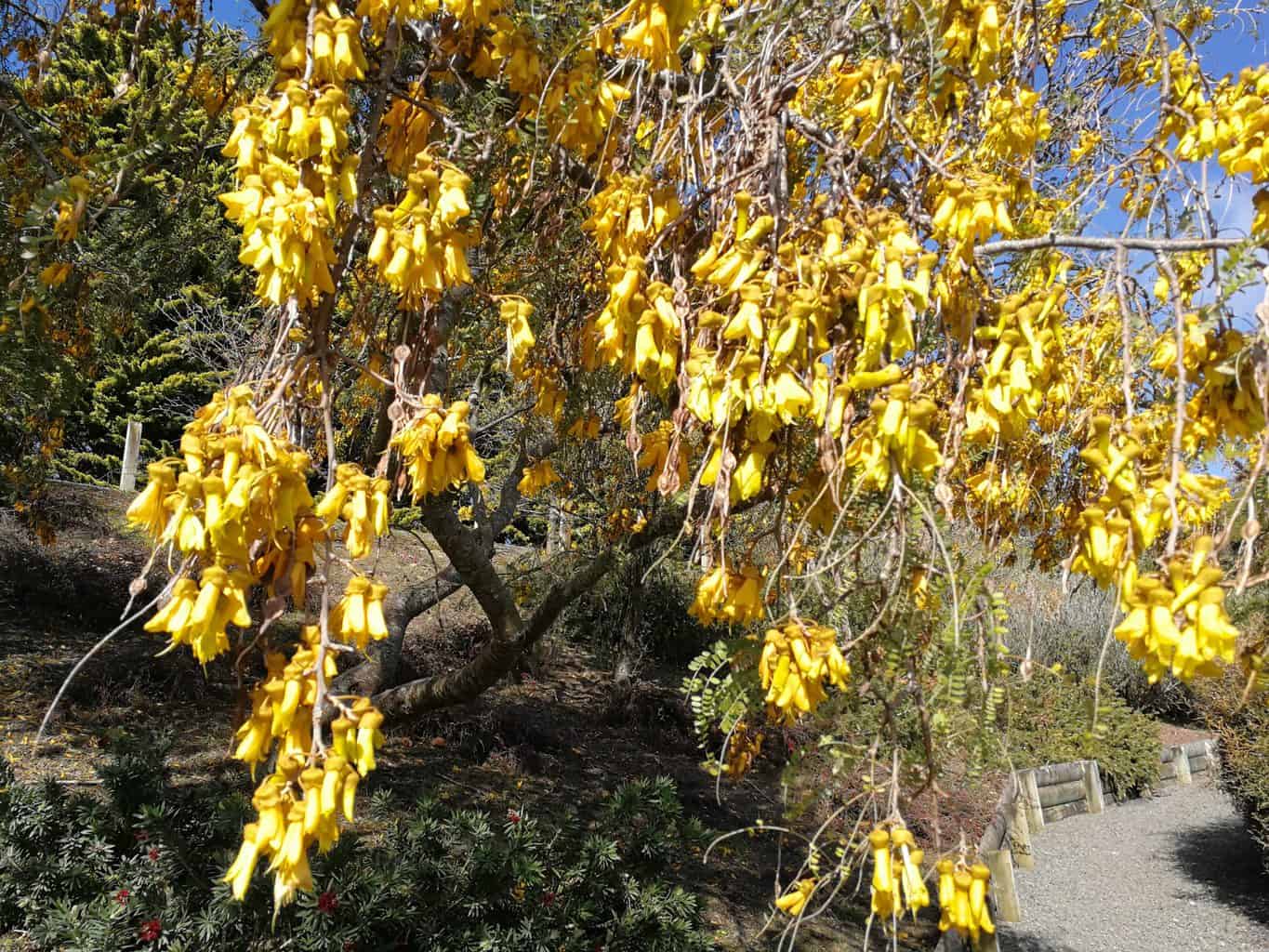
The Kōwhai collection, planted in memory of Harry Cave, is on the bank above Boothby Fern House house. The collection includes the local Wanganui species Sophora godleii (Weeping Kōwhai), Sophora microphylla (Divaricating Kōwha ) with its dainty foliage, and South Island specimens sourced from Banks Peninsula nursery. The tall Sophora macrophyllia were located in Taupo and hover over the white daisies and Grevillea that, given the banks dry conditions, have been under-planted to help stabilize the bank and to attract nectar loving birds.
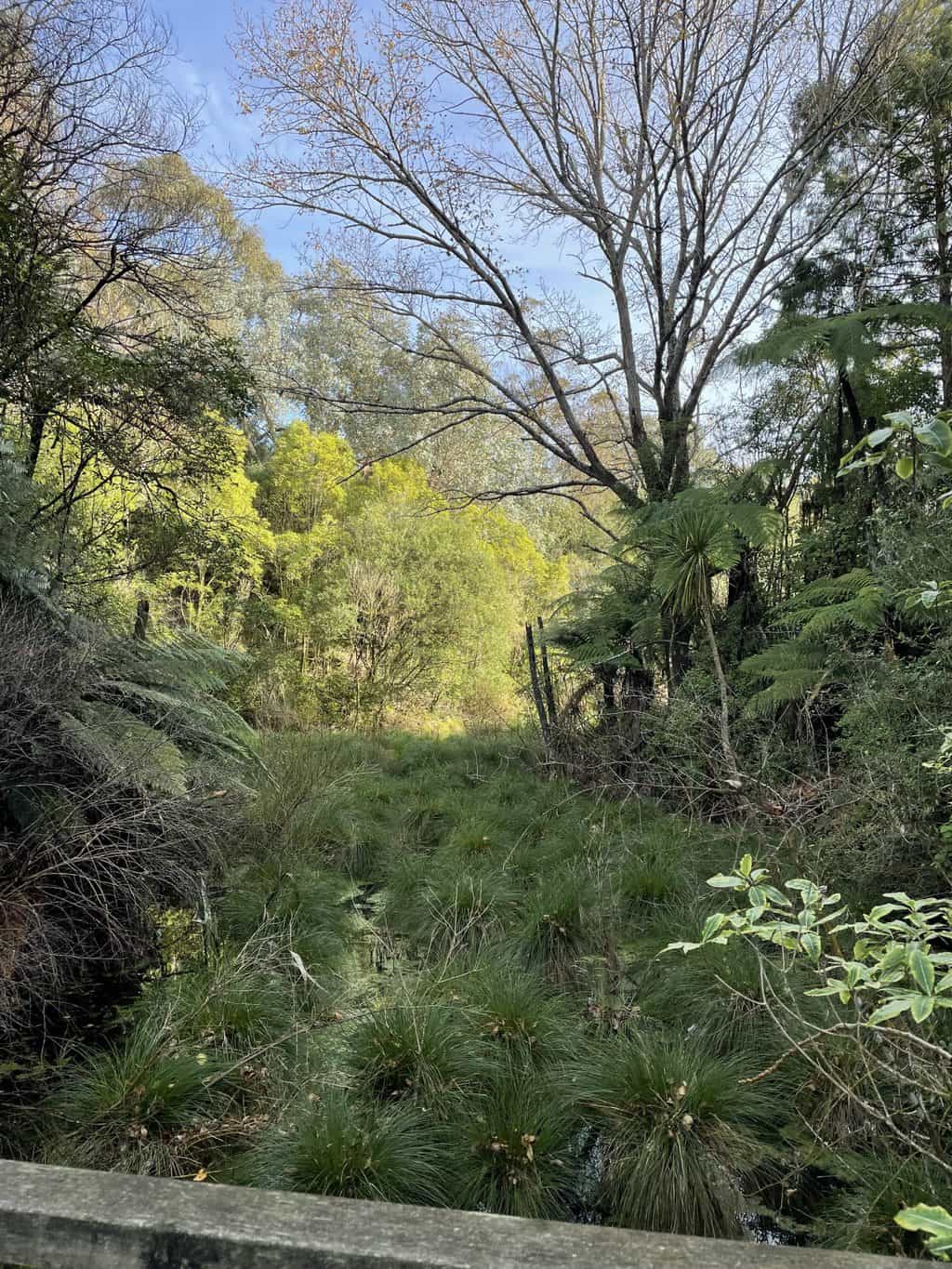
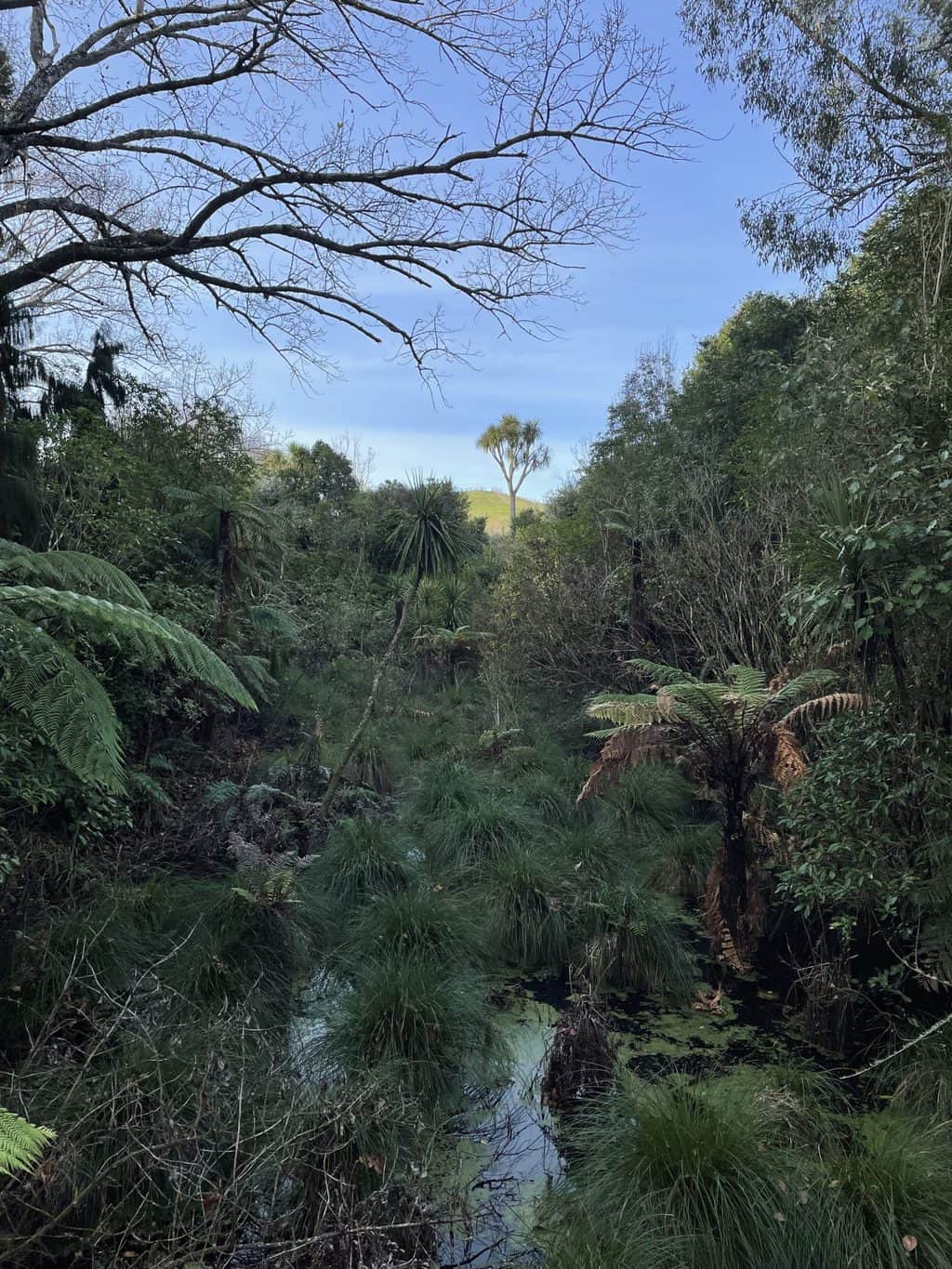
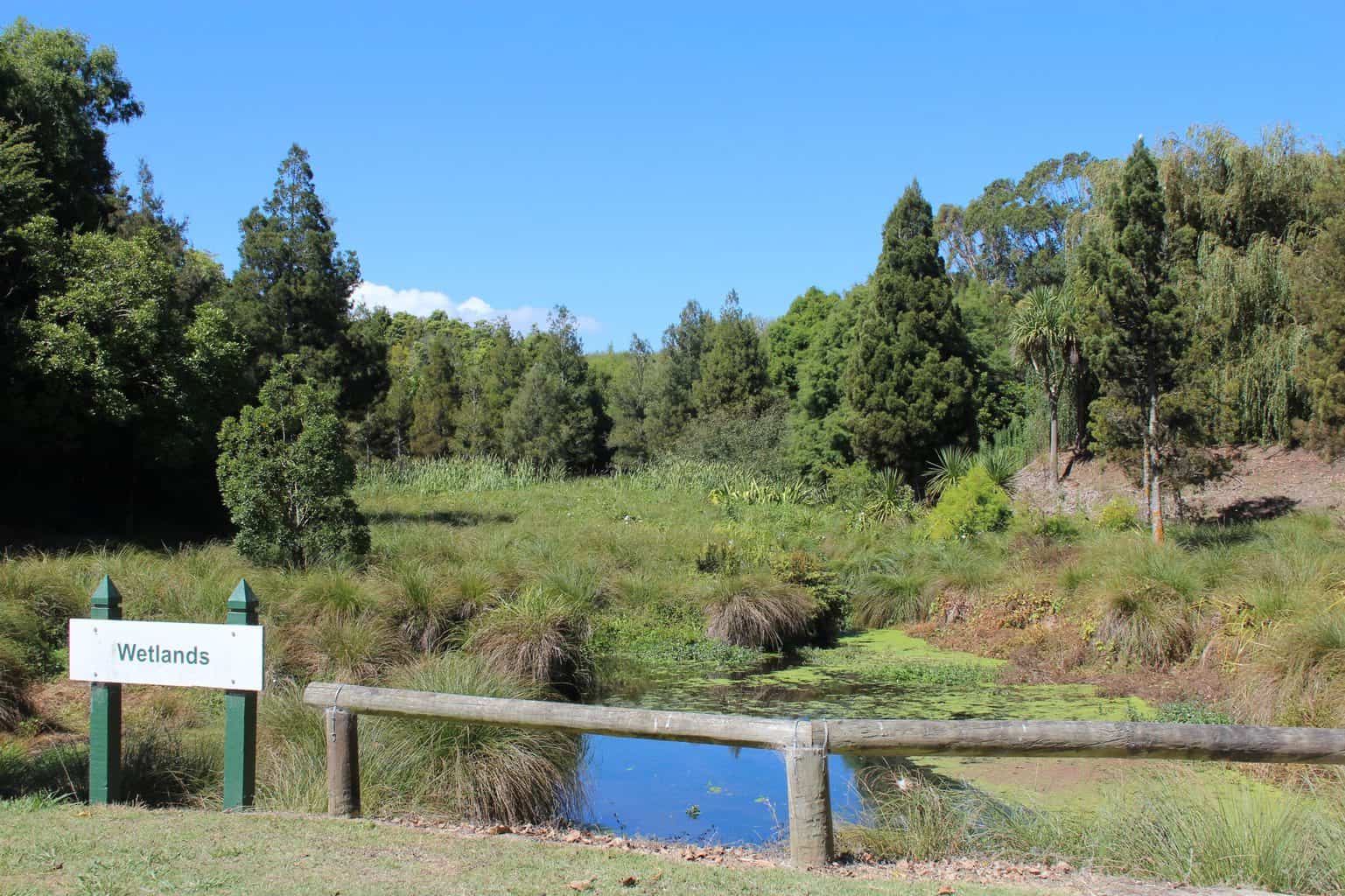
Adjacent to the native forest is the wetlands, which can be viewed from the boardwalk at the southern entrance to the native forest, or across the road from the Japanese Tea House. It is considered an iconic part of the gardens, comprising indigenous low-growing herbaceous vegetation framed by larger trees, again primarily natives.
At this point, the Mowhanau Stream crosses a small alluvial flat and saturates the soil for much of the year. The swampy area is dominated by Carex secta (purei/pukio), a native sedge which grows up to 1.5 metres high. The plants often grow on a tall base resembling a trunk, comprised of rhizomes, roots and leaf bases. Among the sedges is Typha orientalis (raupo), a tall grass which produces tall seed heads in summer and is deciduous.
The trees encroaching into the wetland from the north include Dacrycarpus dacrydoiode (kahikatea), which is New Zealand’s tallest growing tree. Other trees on the fringes are Laurelia novae-zelandiae (pukatea), Coprosma robusta (karamu), and Cordyline australis (cabbage tree/ti kouka . Some of the trees on the southern side are exotic, and include Taxodium distichum (swamp cypress) and Salix x fragilis (crack willow), the latter being a weed tree. All of these plants are well adapted to living in saturated soil.
There is a smaller wetland deeper inside in the native area, viewable only from the footbridge. Being more isolated, this area has more of a wilderness flavour.
return to map